
Navigating the landscape of professional and business advancement often hinges on the language we employ. Understanding the subtle nuances of words like ‘prospect,’ ‘opening,’ and ‘advantage’ can significantly shape how we perceive and seize opportunities. This exploration delves into the power of synonyms for opportunity, revealing how different phrasing can influence strategic thinking, inspire action, and ultimately, drive success. From shaping career paths to launching ventures, the right words can unlock doors to previously unseen possibilities.
The journey unfolds by examining how words like ‘chance,’ ‘break,’ and ‘window’ influence our perception of new possibilities, alongside the subtle differences between ‘possibility,’ ‘prospect,’ and ‘venture.’ We’ll uncover how terms like ‘milestone,’ ‘target,’ and ‘objective’ can motivate progress, and finally, analyze the impact of ‘undertaking,’ ‘endeavor,’ and ‘pursuit’ on commitment and resource allocation. Each section aims to equip readers with a richer vocabulary and a more strategic approach to recognizing and capitalizing on opportunities.
Exploring various avenues to enhance professional growth through alternate phrasing is crucial for success
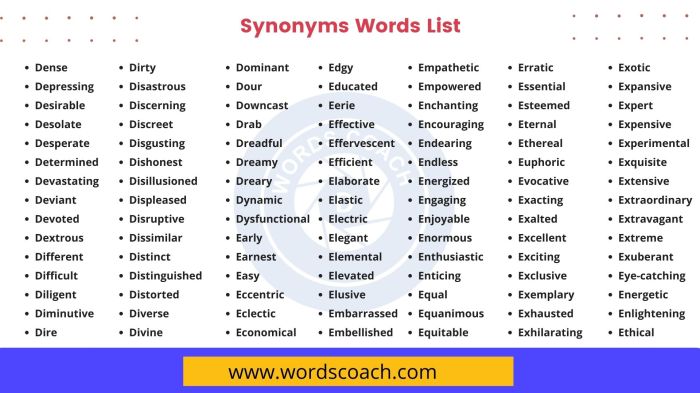
Understanding the nuances of language is a critical skill in the professional world. Choosing the right word to describe an opportunity can significantly impact how it’s perceived and, consequently, how it’s pursued. This is particularly true when discussing career advancement. Precision in language allows for a clearer understanding of the potential benefits and challenges associated with any given path.
Utilizing Synonyms to Describe Professional Growth
The words “prospect,” “opening,” and “advantage” each offer a unique lens through which to view professional growth, highlighting different aspects of advancement. “Prospect” emphasizes the *potential* for future success and the promise of what could be. “Opening” focuses on the *available opportunity* or the specific position available. “Advantage” underscores the *benefit* gained, the edge one has over others, or the strategic gain realized.
Consider a scenario where a software engineer is evaluating their career options. If they are considering a new role, they might view it as a “prospect” if the company has a strong reputation for innovation and offers opportunities for skill development. This emphasizes the potential for long-term career growth. Alternatively, if they are offered a specific job, it is an “opening” – a tangible position with defined responsibilities and a clear path. Finally, if the engineer is leveraging their experience in a niche technology, the new role presents an “advantage,” offering a competitive edge in the job market and the chance to secure a higher salary or a more senior position.
Scenarios for Synonym Usage
Choosing the most appropriate synonym depends heavily on the context. Each word subtly shifts the emphasis, which can influence how the opportunity is perceived and presented.
* Prospect Scenarios:
- A promising startup offering stock options and rapid advancement potential.
- A mentorship program providing access to industry leaders.
- A new project within a company that is expected to significantly increase visibility.
- A PhD program designed to enhance expertise in a specific area.
- A consulting engagement that opens doors to future opportunities.
* Opening Scenarios:
- A job posting for a Senior Marketing Manager.
- An internal vacancy for a Project Lead role.
- A scholarship for a specialized training course.
- An apprenticeship program at a prestigious firm.
- A fellowship for conducting research in a specific field.
* Advantage Scenarios:
- A certification that provides a competitive edge in a particular field.
- A network of contacts that facilitates access to job opportunities.
- A unique skill set that makes one highly sought after.
- A successful project that showcases expertise and leadership.
- A company’s strong brand reputation.
Comparing Implications of Synonyms
The following table contrasts the implications of each synonym in the context of career development.
| Synonym | Strengths | Weaknesses | Career Development Implications |
|---|---|---|---|
| Prospect | Emphasizes potential, future growth, and long-term benefits. Inspires excitement and optimism. | Can be vague or speculative. Relies on assumptions about the future. Requires due diligence to validate the promise. | Encourages proactive career planning, exploring long-term goals, and identifying opportunities aligned with personal ambitions. For example, a candidate assessing a “prospect” may research a company’s financial stability, employee reviews, and growth trajectory. |
| Opening | Highlights a specific, concrete opportunity. Provides clarity on the role and responsibilities. | May lack the excitement of “prospect” or “advantage.” Focuses on the present rather than the future. Can be perceived as transactional. | Facilitates the job application process, clarifying the requirements and expectations of the role. For example, a job seeker reviewing a job “opening” will focus on matching their skills and experience to the listed qualifications. |
| Advantage | Emphasizes competitive edge, strategic gains, and tangible benefits. Highlights unique skills and expertise. | Can be perceived as self-promotional or boastful. May overlook broader career development goals. Could create a sense of pressure to perform. | Encourages self-assessment, identifying skills and experiences that provide a competitive edge. For example, a professional might use the “advantage” they have to negotiate a higher salary or better benefits package. |
Examining how the choice of words shapes the perception of new possibilities is incredibly insightful
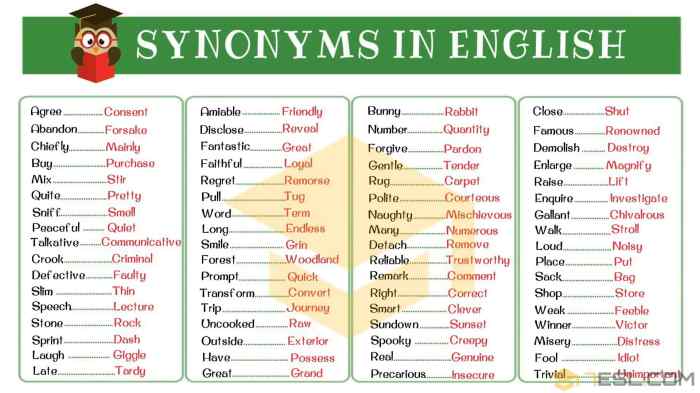
The language we use profoundly influences how we perceive the world, and this is especially true when discussing opportunities. The synonyms we choose – ‘chance,’ ‘break,’ and ‘window’ – each carry distinct connotations that shape our understanding of the possibilities before us. Understanding these nuances allows for a more strategic and effective approach to recognizing and leveraging opportunities, ultimately impacting success.
The Influence of ‘Chance’, ‘Break’, and ‘Window’
The subtle differences in meaning between ‘chance,’ ‘break,’ and ‘window’ significantly alter how individuals perceive new possibilities. “Chance” often implies an element of luck or randomness, suggesting an unpredictable event that may or may not favor the individual. This can lead to a more passive approach, where individuals may feel less in control and more reliant on external factors. “Break,” on the other hand, suggests a significant and perhaps unexpected advantage or opportunity, often implying a disruption of the status quo. It carries a sense of seizing an opening, requiring proactive action to capitalize on the moment. “Window” evokes a sense of limited time and a fleeting moment. It highlights the urgency of action, emphasizing the need to recognize and act swiftly before the opportunity disappears. These different connotations shape the overall feeling associated with each opportunity, influencing motivation, risk assessment, and the strategies employed to pursue them.
How ‘Chance’ Shapes Perception
The word “chance” often conjures an image of serendipity and luck. It suggests an unforeseen occurrence, an unpredictable turn of events that might lead to a positive outcome. This perception can foster a sense of hope and the willingness to take risks, even if the odds seem slim. However, it can also lead to a more passive approach, where individuals may feel less empowered to influence the outcome. Consider a scenario where a company is struggling to secure funding for a new project. A venture capitalist, impressed by a chance encounter at a networking event, expresses interest. Describing this as a “chance” meeting emphasizes the role of luck and randomness. It might lead the company to focus on maintaining a positive relationship with the investor, hoping that luck will continue to be on their side. In this instance, the “chance” framework is used to describe the situation.
The Impact of a ‘Break’
The term “break” suggests a significant advantage or opportunity, often unexpected and disruptive. It implies a disruption of the established order, a moment to capitalize on a shift in circumstances. This perception encourages a proactive mindset, urging individuals to actively seize the opening. Imagine a situation where a competitor, due to an internal scandal, experiences a significant drop in market share. For a rival company, this presents a “break”—an opportunity to aggressively acquire market share, poach key employees, and solidify its position. The “break” signifies a significant advantage that needs to be actively pursued. This perspective motivates the company to launch targeted marketing campaigns, offer competitive incentives, and actively pursue the competitor’s clients. This is the opportunity they have been waiting for.
The Significance of a ‘Window’
“Window” emphasizes the limited duration of an opportunity. It signifies a fleeting moment, a time-sensitive opening that requires swift action. This perception highlights the urgency of the situation, motivating individuals to recognize and act decisively before the opportunity vanishes. For example, consider a company that identifies a rapidly evolving technological trend. The “window” of opportunity might be the next 12-18 months. During this period, the company must develop and launch a new product to capture market share. This timeframe emphasizes the need for rapid innovation, aggressive marketing, and efficient execution. The “window” is not indefinite; the company must act now or miss out on the chance to succeed.
Recognizing and Leveraging ‘Chance’, ‘Break’, and ‘Window’ in Business
Understanding the connotations of ‘chance’, ‘break’, and ‘window’ allows businesses to strategically recognize and capitalize on opportunities. Here’s a method:
- Identify the Nature of the Opportunity: Determine whether the situation primarily involves luck, a significant advantage, or a time-sensitive opening. Is the opportunity driven by chance events, a disruptive shift in the market, or a fleeting technological trend? For example, the discovery of a new patent related to a product could be viewed as a “break” for a company in the industry.
- Frame the Opportunity Appropriately: Choose the word that best reflects the nature of the opportunity to influence the team’s perception and approach. If the situation is a “chance,” emphasize networking and relationship building. If it is a “break,” prioritize aggressive action and market disruption. If it is a “window,” focus on speed and rapid execution. This is a crucial step to align the team’s mindset with the situation.
- Develop a Strategic Plan: Based on the chosen framing, create a strategic plan to maximize the potential of the opportunity. For a “chance,” this might involve building relationships and maintaining a flexible approach. For a “break,” it may require a swift and decisive response. For a “window,” the plan should emphasize speed, efficiency, and decisive action. A company facing a “window” of opportunity might focus on agile development, streamlined processes, and rapid market entry.
- Communicate Effectively: Use the chosen word consistently in all communications to reinforce the desired perception and drive action. For example, when describing a “break,” emphasize the need to “break through” barriers or “break the mold.” When presenting a “window,” stress the need to “open the window” of opportunity and “close the deal” before time runs out.
- Monitor and Adapt: Continuously monitor the situation and adapt the strategy as needed. The nature of the opportunity might evolve, requiring a shift in framing and approach. If a “chance” encounter leads to a “break,” the strategy should shift from passive relationship building to aggressive action. If the “window” begins to close, the focus should shift to quick wins and minimizing risk.
Understanding the subtle distinctions between different expressions of opportunity can reveal unexpected nuances
The selection of words significantly influences how we perceive and interact with opportunities. Each synonym for “opportunity” carries a unique weight, shaping our expectations and influencing our decisions. This nuanced understanding is critical for strategic thinking and effective communication.
Differences in Connotation Between ‘Possibility’, ‘Prospect’, and ‘Venture’
Understanding the subtle differences in connotation between “possibility,” “prospect,” and “venture” allows for more precise communication and strategic thinking. Each term subtly alters the perceived risk and potential rewards associated with an opportunity.
- Possibility: This term emphasizes the potential for something to happen. It suggests a degree of openness and flexibility, focusing on the potential outcome rather than the specifics of the path. It often implies a lower perceived risk and a broader range of potential outcomes. The rewards, while potentially significant, are viewed as less certain.
- Prospect: “Prospect” implies a higher degree of likelihood or probability. It suggests a more defined path towards a specific outcome, often with a more clearly delineated set of potential rewards. While it still carries some element of risk, the focus is on the favorable aspects and the expectation of a positive outcome. This term often suggests a more structured or planned approach.
- Venture: “Venture” signifies a more active and often riskier undertaking. It implies a deliberate action, a willingness to invest resources (time, money, effort) in pursuit of an opportunity. The rewards associated with a venture are often perceived as potentially higher, but so is the risk of failure. This term frequently suggests innovation, entrepreneurship, or a significant investment of resources.
For instance, consider a company exploring the development of a new electric vehicle. Describing the project as a “possibility” suggests an early-stage exploration of different technologies and market needs. Framing it as a “prospect” might indicate that the company has conducted market research and identified a specific target audience. Finally, characterizing it as a “venture” implies a commitment to investing significant capital and resources in developing, manufacturing, and marketing the vehicle. The “possibility” stage might involve conceptual designs and feasibility studies, the “prospect” stage would encompass detailed engineering plans and supply chain negotiations, and the “venture” stage would involve the actual production and launch of the vehicle.
Unveiling the power of synonyms to inspire action and motivate progress is truly fascinating
Exploring how language shapes our perception of opportunities is essential for fostering a proactive mindset. The specific words we choose can significantly influence our drive to succeed, turning abstract possibilities into concrete actions. This analysis delves into how the synonyms ‘milestone’, ‘target’, and ‘objective’ can be employed to frame opportunities, sparking motivation and driving progress.
The Psychological Impact of ‘Milestone’, ‘Target’, and ‘Objective’
The choice of wording in goal setting can have a profound psychological impact, affecting how we approach challenges and perceive progress. Using the term ‘milestone’ can create a sense of accomplishment and provide a clear roadmap to success. A milestone represents a significant point in a journey, marking tangible progress and fostering a feeling of momentum. Each successfully achieved milestone provides a sense of closure and encourages the individual to proceed with confidence. This approach breaks down larger goals into manageable segments, reducing the feeling of being overwhelmed and increasing the likelihood of sustained effort.
In contrast, framing an opportunity as a ‘target’ activates a competitive drive and encourages a focus on precision and accuracy. The term ‘target’ implies a clear goal, demanding a direct and focused approach. This can be particularly effective in situations where measurable results are crucial, such as sales or performance-based initiatives. The inherent challenge of hitting a target fuels the desire to outperform, leading to increased effort and dedication. It’s about precision, focus, and a direct path to the desired outcome.
Finally, the word ‘objective’ fosters a sense of purpose and strategic planning. Objectives represent the broader aspirations, providing a framework for action and decision-making. Setting objectives encourages individuals to consider the long-term implications of their actions and to align their efforts with a larger vision. This strategic focus can be especially valuable in complex projects where careful planning and coordination are essential. The objective offers a comprehensive perspective, guiding actions toward a specific and meaningful result.
Recognizing how the choice of words reflects different levels of commitment to achieving a desired outcome is important
The careful selection of words significantly influences how an opportunity is perceived and the level of commitment it implies. Different terms carry varying connotations, subtly shaping expectations and reflecting the resources and effort a project demands. Understanding these nuances is crucial for clear communication and effective planning, especially in the context of business strategy and execution.
Comparing Implications of ‘Undertaking’, ‘Endeavor’, and ‘Pursuit’
The choice of words to describe an opportunity reveals the depth of commitment and effort. Each term – ‘undertaking’, ‘endeavor’, and ‘pursuit’ – suggests a different level of engagement, resources, and expected duration. Recognizing these distinctions is vital for setting realistic expectations and managing stakeholders.
* Undertaking: This term often describes a project or task that is initiated. It implies a degree of formality and a commitment to completing the work, but it may not necessarily signify a significant investment of resources or a long-term commitment. It suggests a manageable scope.
* *Example:* “The company’s new website redesign is an *undertaking* that will be completed within the next quarter.”
* Endeavor: This term suggests a more ambitious project that requires considerable effort, resources, and time. An endeavor often involves overcoming challenges and may not guarantee success. It highlights the importance of sustained effort and dedication.
* *Example:* “Expanding into the Asian market is a significant *endeavor* that requires extensive market research and adaptation of business models.”
* Pursuit: This term implies a long-term commitment and a strategic focus. A pursuit often involves multiple stages, significant resource allocation, and a persistent drive to achieve a specific goal, often involving competition or a challenging environment. It indicates a deep-seated dedication.
* *Example:* “The company’s *pursuit* of sustainable energy solutions involves continuous research, development, and investment over several years.”
The choice between these terms dictates the tone and expectations surrounding the project.
Examples in a Business Plan
The application of ‘undertaking’, ‘endeavor’, and ‘pursuit’ in a business plan provides a clear indication of the project’s scope and the commitment involved. The choice of terminology influences the sections where each term would be most appropriate, providing clarity and direction to stakeholders.
* Undertaking:
* *Section:* *Project Timeline and Milestones*.
* *Example:* The website redesign *undertaking* will involve three phases: requirements gathering, design and development, and launch, each with clearly defined milestones and deadlines. This section focuses on the operational aspects and the steps necessary to complete the project.
* Endeavor:
* *Section:* *Market Analysis and Strategy*.
* *Example:* Entering the emerging markets represents a significant *endeavor*. This section will detail the challenges and strategies for market entry, including competitive analysis, risk assessment, and resource allocation. It highlights the complexities of the venture.
* Pursuit:
* *Section:* *Long-Term Vision and Growth Strategy*.
* *Example:* The *pursuit* of becoming a market leader in renewable energy involves a sustained commitment to innovation, research and development, and strategic partnerships. This section describes the company’s long-term objectives and the strategies to achieve them, requiring ongoing effort and investment.
Illustration of Progression
The illustration below visually represents the progression from an ‘undertaking’ to an ‘endeavor’ and finally to a ‘pursuit’. The graphic uses distinct elements to symbolize the increasing commitment and resource allocation associated with each term.
The illustration starts with a single, small seed being planted in a well-prepared patch of soil. This represents an *undertaking*, a small-scale, defined project with limited resources. The image conveys the initial stages of the project.
Next, the seed has sprouted, and is growing into a sapling in a larger, fenced-in area. The sapling represents an *endeavor*, which involves increased investment and the need for protection and cultivation. The larger area symbolizes expanded resources and the growing complexity of the project.
Finally, the sapling has grown into a large, mature tree in a vast forest, with several other trees around it. This represents a *pursuit*, a long-term, strategic endeavor requiring significant resources, resilience, and the ability to adapt to a competitive environment. The forest symbolizes the competitive landscape, and the mature tree signifies the company’s long-term goals and sustainability. The illustration provides a clear visual progression of commitment and resource allocation, highlighting the evolving nature of each term.
Ending Remarks
In conclusion, mastering the art of utilizing synonyms for opportunity provides a critical edge in both professional and entrepreneurial endeavors. From recognizing subtle differences in connotation to understanding how specific words inspire action, the ability to choose the right phrasing can significantly impact success. Whether aiming to enhance career growth, launch a new venture, or simply frame goals more effectively, the insights gained from this exploration offer a powerful toolkit for navigating the ever-evolving world of opportunities.
